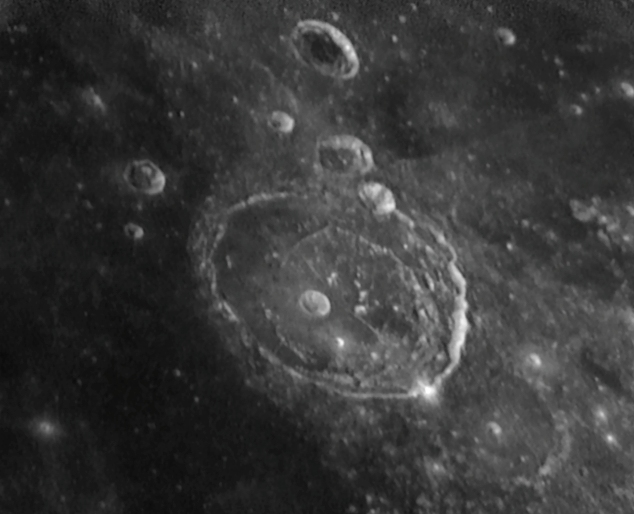
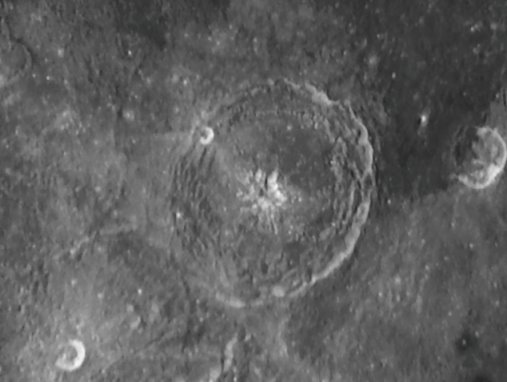
Gassendi
 Kepler

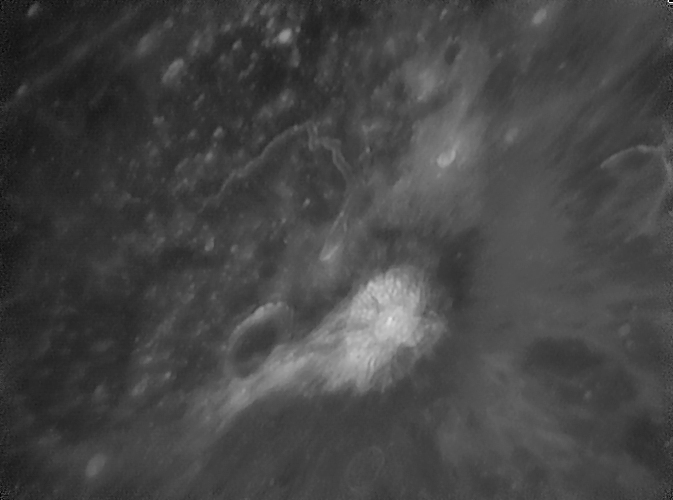
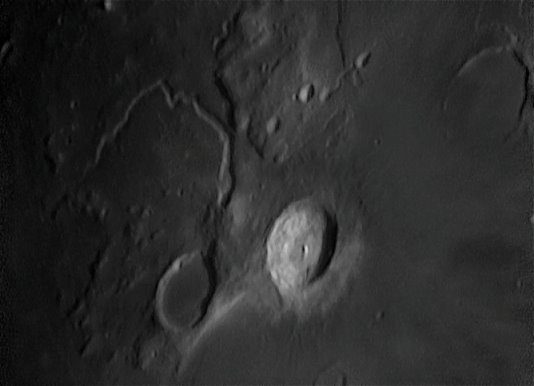
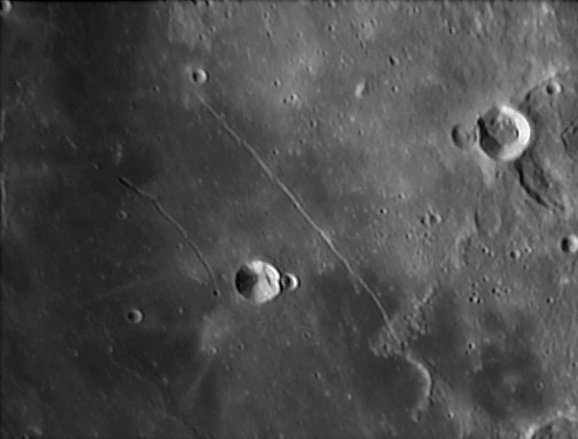
 Vallis Schröteri is a sinuous valley on the surface of the Moon. It is located on a rise of continental ground, sometimes called the Aristarchus plateau, that is surrounded by the Oceanus Procellarum to the south and west and the Mare Imbrium to the northwest. At the southern edge of this rise are the craters Aristarchus and Herodotus.


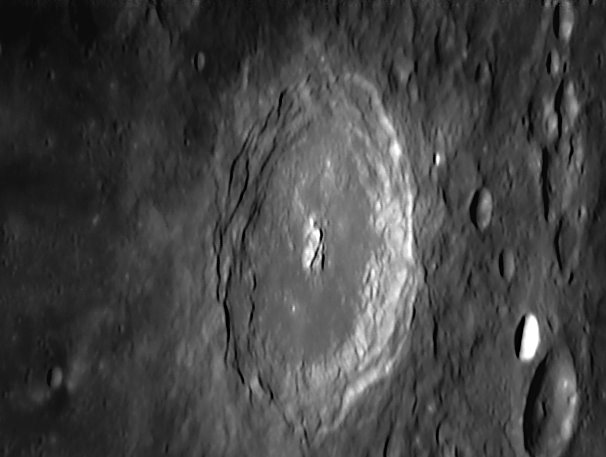
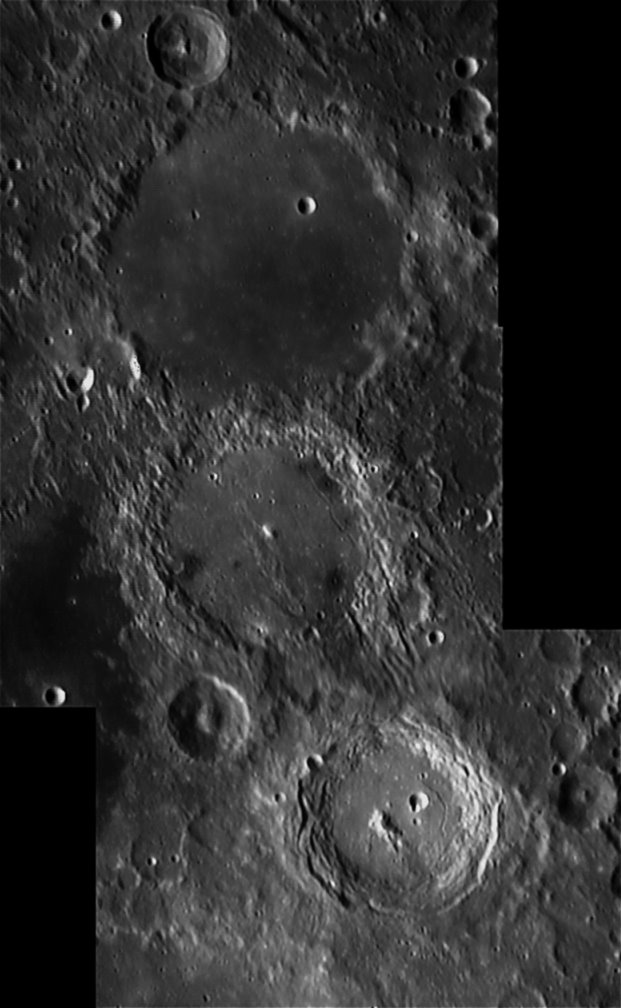 2.5x Tele Vue, Toucam Pro. Some fair seeing, mostly bad.
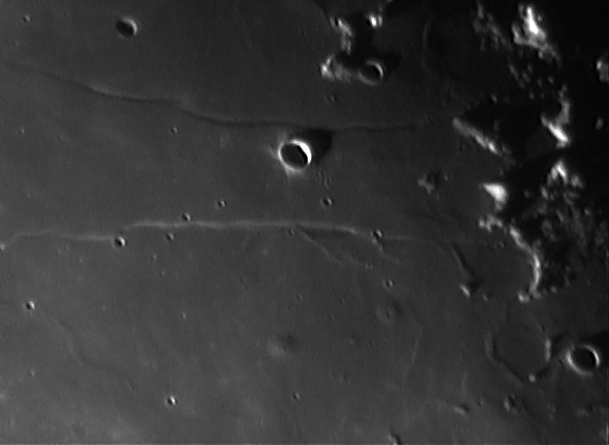 I leapt out of bed at 3:30 this morning to check the seeing for observing the Moon. The seeing wasn't very good, It was misty with clouds that completely obscured the view sometimes.
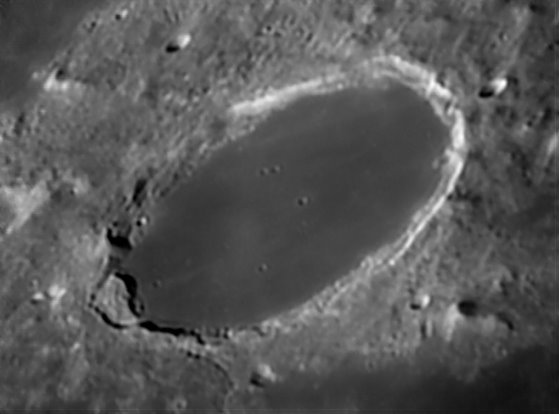
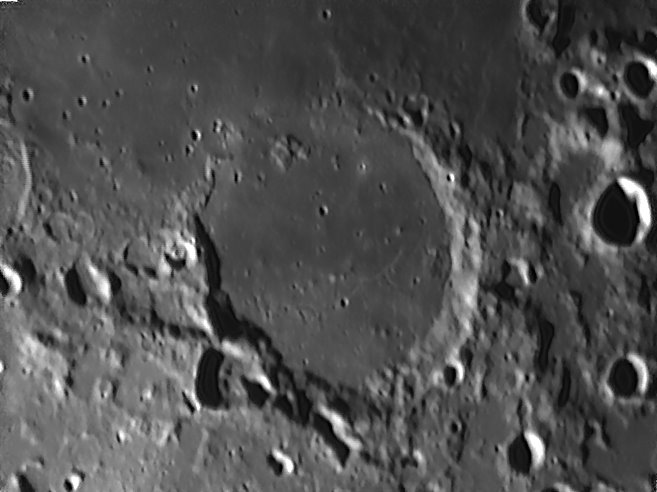 Fracastorius is the lava-flooded remnant of an ancient lunar impact crater located at the southern edge of Mare Nectaris. To the northwest of this formation lies the Beaumont crater, while to the northeast is Rosse.
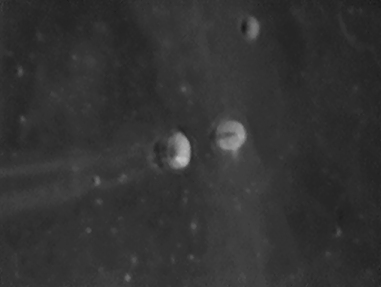 I took this with a Tele Vue 2.5x Powermate and a Celestron 2x Barlow together. The AVI was 3000 frames taken at 10fps. Most of it looked very blurrred/grainy and out of focus, but it processed to this. This image is shrunk by 75% to make it look a bit sharper.
 Cleomedes is a prominent lunar crater located in the northeast part of the visible Moon, to the north of Mare Crisium. It is surrounded by rough ground with multiple crater impacts. The irregular Tralles crater is intruding into the northwest rim. To the east is the Delmotte crater. North of Cleomeses is a triple-crater formation with Burckhardt crater occupying the center.
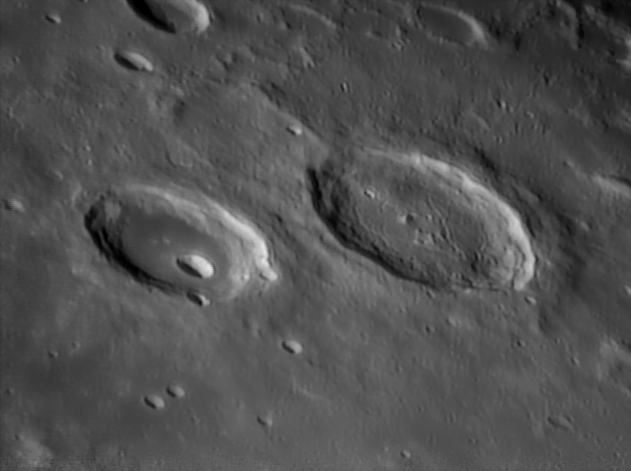 Atlas is a prominent lunar impact crater that is located in the northeast part of the Moon, to the southeast of Mare Frigoris. Just to the west is the slightly smaller but still prominent Hercules crater. Northeast of Atlas is the large Endymion crater.

I ordered a Powermate at the weekend from Telescope House.
It's coming tomorrow, I'll tell ya all about it. :-)
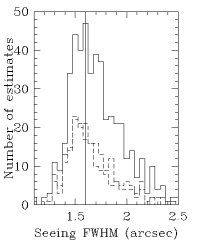 I found a golden rule to be untrue last night. The golden rule that I'm talking about is:-